Termite Inspection checks accessible foundation edges and wood; rainfall varies by elevation, so site scope matters. Typical inspections run $75–$200 based on property size and report scope.
Wasps Under Roof Eaves: When Is Nest Removal Unsafe?
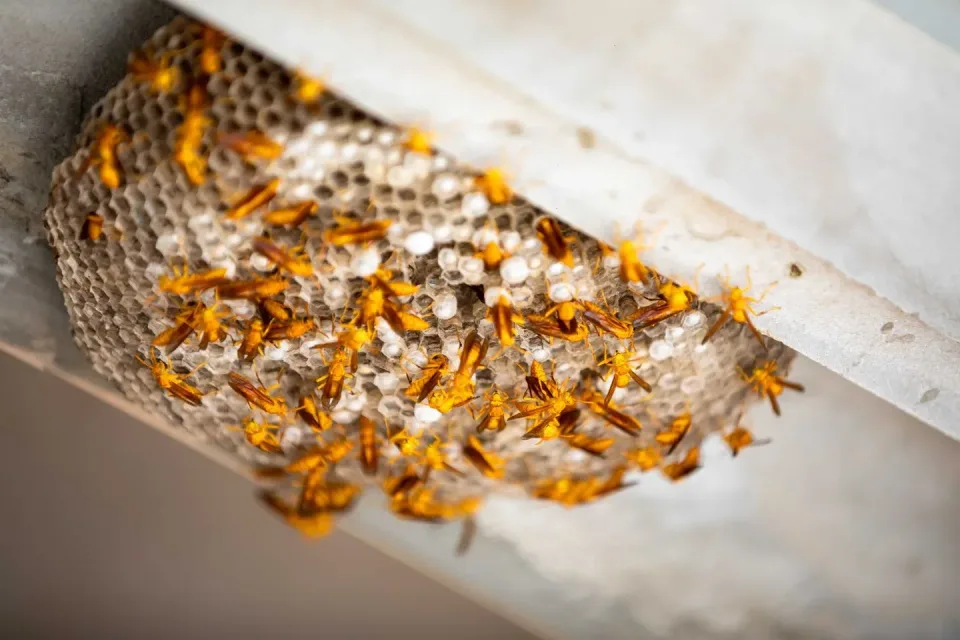
Is Knocking Down a Wasp Nest Under Your Eaves Worth the Risk?
You spot a papery gray nest tucked under the eave above your patio door, and wasps are buzzing in and out all afternoon. Monsoon season makes it worse: downpours can back water under damaged rooflines and push wasps toward dry interior gaps, so a nest that looked dormant in June can be active again by August.
Our pest removal service starts with identifying the species and entry point before anyone reaches for a ladder. Here’s what that decision looks like from the ground:
| Situation | Risk level | Our call |
|---|---|---|
| Nest smaller than a golf ball, ground level | Low | DIY spray at dusk is reasonable |
| Nest under a second-story eave | High | Call us |
| Wasps entering a roofline gap, no visible nest | High | Call us |
| Nest near a door or play area | High | Call us |
Why Do Wasps Keep Choosing Your Roofline?
A wasp nest under your eave is a hazard the moment it sits above eye level or near a door, because paper wasps defend a zone of roughly three feet and a single knockdown attempt can put a dozen insects in the air around your head. The nest itself is rarely the problem the entry point behind it usually is. We have pulled nests off stucco and tile-roof homes across the state for over a decade, and the pattern repeats: the visible nest is the symptom, the gap in the soffit or degraded sealant is the cause.
Eaves offer shade, elevation, and protection from rain everything a founding queen wants in spring. Desert landscaping and irrigation can attract pests too, since flowering plants and dripping drip lines give wasps both nectar and water within a short flight of your roof.
Add heat pressure, and your eave becomes prime real estate: roof rats and insects may seek shelter during heat, and wasps ride the same logic. If you’ve had nests in the same corner two years running, the old papery residue is acting as a harborage signal new queens reuse successful sites.
What Makes DIY Nest Removal Unsafe?
Height, surprise, and spray reach. Store-bought aerosols shoot maybe eight feet, and a nest under a second-story eave is often twelve to twenty feet up, which forces you onto a ladder with one hand on a can.
We treat these with a wasp nest treatment applied from the ground using a crack-and-crevice sprayer with an extension wand, which delivers insecticide directly into the nest opening without anyone standing beneath it. The step most homeowners skip: treating at dusk or dawn, when the entire colony is home.
Spray at noon and half the workers are out foraging they return to a partially treated nest and rebuild.
When Should You Call a Pro Instead of Grabbing a Ladder?
Call us if the nest is bigger than a tennis ball, if wasps are entering the roofline through a gap rather than hanging a visible nest, or if anyone in the home has reacted badly to a sting before. Hidden nests inside soffits and wall voids are the ones that go sideways you spray the visible paper, the colony inside the cavity swarms out through the nearest opening, which is often your back door. That’s also when we check for neighbors in the same void: rodent removal calls frequently uncover pack rat nests and debris packed into the same eave gaps wasps are using, and both problems need the entry sealed, not just the insects killed.
What Does Professional Removal Cost?
Cost climbs when the job involves roofline access, void treatment, or follow-up exclusion work to close the gap so next spring’s queens can’t restart the cycle. We quote after seeing the nest a photo texted to our office often gets you a ballpark the same day.
How Do You Keep Wasps from Coming Back?
Exclusion beats extermination. Once the colony is down, we seal the gap with appropriate materials and recommend trimming back the flowering landscape that feeds them.
For a full picture of what else might be living around your property, our guide to what to ask before hiring an Arizona pest control company covers the questions worth posing, and our pest exclusion team handles the permanent fixes. Learn more at Arizona Pest Pros.
Which Nest Removal Approach Fits Your Situation
Not every wasp problem needs the same response, and the right choice depends on nest size, height, and whether wasps are entering the structure. Here’s how the common approaches stack up:
| Option | Best for | Key detail |
|---|---|---|
| DIY aerosol spray | Nest under a golf ball, ground level | ~8 ft spray reach; treat at dusk |
| Professional ground treatment | Eave nests up to ~20 ft | Extension wand, no ladder needed |
| Void treatment | Wasps entering soffit gaps | Targets colony inside the cavity |
| Exclusion after removal | Repeat nests in the same corner | Seals the entry for future seasons |
| No professional pest service | Nests away from doors, small and dormant | Watch from a distance; abandon if activity grows |
Reduced-risk options exist when the situation allows a dormant nest away from traffic sometimes needs nothing more than monitoring. Phoenix-area summer highs often exceed 100°F, which pushes wasp activity into early morning and evening windows, so timing matters as much as product choice.
Whether the technician is licensed matters more than the brand of spray; Arizona requires applicator certification for structural work. We’ve treated homes near Montezuma Castle National Monument and subdivisions alike, and the decision framework stays the same.
How We Prep a Roofline Treatment Before Anyone Sprays
A wasp job goes smoothly or badly based on the ten minutes of prep before treatment. From Downtown Phoenix townhomes to cabins near Flagstaff Historic Downtown, here’s the sequence we follow:
-
Identify the pest first: Confirm paper wasp versus honey bee before any product comes out bees near places like Chase Field’s downtown corridor often need live removal, not extermination.
-
Clear the treatment zone: Move patio furniture, grills, and kids’ toys at least ten feet from under the eave so overspray lands on stucco, not belongings.
-
Secure pets inside: Keep dogs and cats indoors through the application and the label-required re-entry interval, usually a few hours.
-
Note the water situation: Dry air increases evaporation and desiccation, so residual products can break down faster on sun-baked west-facing eaves expect reinspection sooner there.
-
Plan around weather: In high-elevation Flagstaff, winters bring snow and freezing temperatures that kill colonies naturally; in the low desert, treat early morning before heat spikes.
-
Document everything: Record treated areas and products used so follow-up visits match the label.
If you’ve ever hiked Horseshoe Bend in summer, you know Arizona sun punishes anything exposed your roofline sealants are no exception, and degraded caulking is exactly where next year’s queens move in.
Common Questions About Pest Control in Arizona
Can I Remove a Wasp Nest Under My Roof Eaves Myself in Arizona?
Yes, but only when the nest is smaller than a golf ball, at reachable height, and away from doors. Anything higher or larger needs professional equipment extension wands reach nests 20 feet up without a ladder. Precision pest inspection also matters, because wasps entering a soffit gap usually mean a hidden colony a spray can won’t touch.
How Much Does Wasp Nest Removal Cost in Arizona?
Most general pest treatment runs $100–$300 depending on home size and pest pressure, and a standard eave nest fits that range. Costs rise when the job requires roofline access, void treatment, or exclusion work to seal the entry point. We quote after seeing the nest, and a photo often gets you a ballpark the same day.
What If Wasps Are Flying into a Gap in My Soffit but I Can’t See a Nest?
No, don’t spray that gap yourself. A hidden colony inside the cavity will swarm out through the nearest opening often your door or a ceiling fixture when disturbed. A licensed pest exterminator treats the void directly and then seals the entry so next spring’s queens can’t reuse the site.
Is Professional Wasp Removal Regulated in Arizona?
Yes. Structural pest control falls under Arizona Revised Statutes, Title 3, Chapter 20, and the Arizona Administrative Code, Title 3, Chapter 8, which set business licensing and applicator certification requirements through the Arizona Department of Agriculture. Pesticide use also follows FIFRA label requirements under 7 U.S.C. § 136, meaning the product must be applied exactly as the EPA-approved label directs.
After Wasp Removal, Should I Do Anything Else to Protect My Eaves?
Pest exclusion is the logical next step sealing the gap prevents repeat nests, and sun-degraded sealants are the usual entry point. Many homeowners bundle this with rodent-proofing, since the same roofline gaps admit roof rats. Occupational Safety and Health Administration standards also guide how our technicians work at height, which is one more reason ladder-and-aerosol DIY carries more risk than people expect.
Ready to Clear That Nest Safely Call Arizona Pest Pros
Arizona’s low-desert summers bring prolonged extreme heat that keeps colonies active deep into fall, and intense sun degrades the sealants and exterior materials wasps exploit for entry so the problem rarely solves itself. Mosquito control and broader insect control often come up in the same conversation, since standing water and shaded eaves attract more than one pest. Here’s the decision snapshot:
| Trigger | Action | Timing |
|---|---|---|
| Nest under 2nd-story eave | Professional treatment | Within days |
| Wasps entering soffit gap | Treatment + exclusion | Before monsoon |
| Sting allergy in household | Professional only | Immediately |
| Small dormant nest | Monitor or remove | Your call |
Call (855) 681-0299 or request a quote through our wasp nest removal page we’ll look first, explain the plan, and treat only what needs treating.
Services Offered
Services We Offer in Springerville, AZ
Explore related services available in Springerville, AZ.
Scorpion treatment covers home perimeters and accessible entry areas; typical jobs run $150–$400, depending on perimeter size and access.
Cockroach Control targets kitchen and bathroom activity in homes and rentals; treatment scope and access affect the typical $100–$300 cost.
Bed bug treatment addresses affected bedrooms and furnishings; typical jobs run $300–$1,500, depending on room count and treatment method.
Wasp Nest Removal covers accessible nests and eave debris for Arizona homeowners; height, nest size, and access affect typical $150–$500 pricing.
Full-structure termite treatment for Arizona homes: soil termiticide zones, bait stations, and borate wood work, typically $500-$3,000 depending on treatment method and how far the infestation has spread.
Trapping, exclusion, and cleanup for mice, rats, and pack rats in Arizona homes. Rodent exclusion typically runs $200–$1,500 depending on entry points and repair work.
Ant Control for Arizona homes: inspection, baiting, and crack-and-crevice treatment of trails and nests, priced by colony size and access, often $100-$300.
Mosquito Control treats yard and patio areas for homeowners; typical visits run about $100–$300, depending on property size and mosquito pressure.
Bee removal for homes and businesses: hive inspection, treatment, and void sealing so colonies don't return. Cost shifts with hive size and access.
Tick treatment for Arizona yards and property edges typically runs $125–$350, depending on treated area and access.
Pest Identification examines insect remains, droppings, and entry evidence in homes or commercial spaces; scope and access shape the assessment fee.
Inspection, web removal, and perimeter treatment for homes with recurring spider activity. Cost runs $100-$300 depending on home size and spider pressure.
Gopher Control locates active tunnels and addresses burrowing damage in lawns and landscaped areas; typical jobs run about $150–$500, depending on yard size and access.
Flea treatment for homes and rentals: inspection, crack-and-crevice and carpet treatment, plus follow-up visits to break the egg cycle. Cost depends on home size and infestation level.
Emergency Pest Treatment in Arizona: urgent wasp, scorpion, and rodent response with inspection and same-visit treatment plans. Call (855) 681-0299.
Cities & Towns
Service Areas in Springerville
Select a city to find local pest control providers we cover in Springerville.
Sun City West, AZ85375Lake Montezuma, AZ86335Arizona City, AZ85193Kayenta, AZ86033Coolidge, AZ85194Yuma, AZ85365Catalina Foothills, AZ85750Rio Verde, AZ85263Beaver Dam, AZ86432Whetstone, AZ85616Window Rock, AZ86515Kearny, AZ85137Timberline-Fernwood, AZ86004Whiteriver, AZ85941Show Low, AZ85901Eagar, AZ85938Anthem, AZ85086Sierra Vista Southeast, AZ85650Cottonwood, AZ86326St. Johns, AZ85936Queen Creek, AZ85142Kingman, AZ86409San Carlos, AZ85550Wickenburg, AZ85390
Show all 152 cities
Camp Verde, AZ86322Colorado City, AZ86021Bagdad, AZ86321Golden Valley, AZ86413Tucson Mountains, AZ85743Quartzsite, AZ85346Williams, AZ86046Avenue B and C, AZ85364Chinle, AZ86503Village of Oak Creek, AZ86351Heber-Overgaard, AZ85933Blackwater, AZ85147Mesa, AZ85208Central Heights-Midland City, AZ85501Pinetop-Lakeside, AZ85935Cordes Lakes, AZ86333San Luis, AZ85336San Tan Valley, AZ85143Goodyear, AZ85139Guadalupe, AZ85283Marana, AZ85653Litchfield Park, AZ85340Dewey-Humboldt, AZ86329Flagstaff, AZ86011Desert Hills, AZ86404Clifton, AZ85533
Get a Quote
Get a Pest Control Quote in Springerville, AZ
Share job details below or call our team directly. Phone: (855) 681-0299